
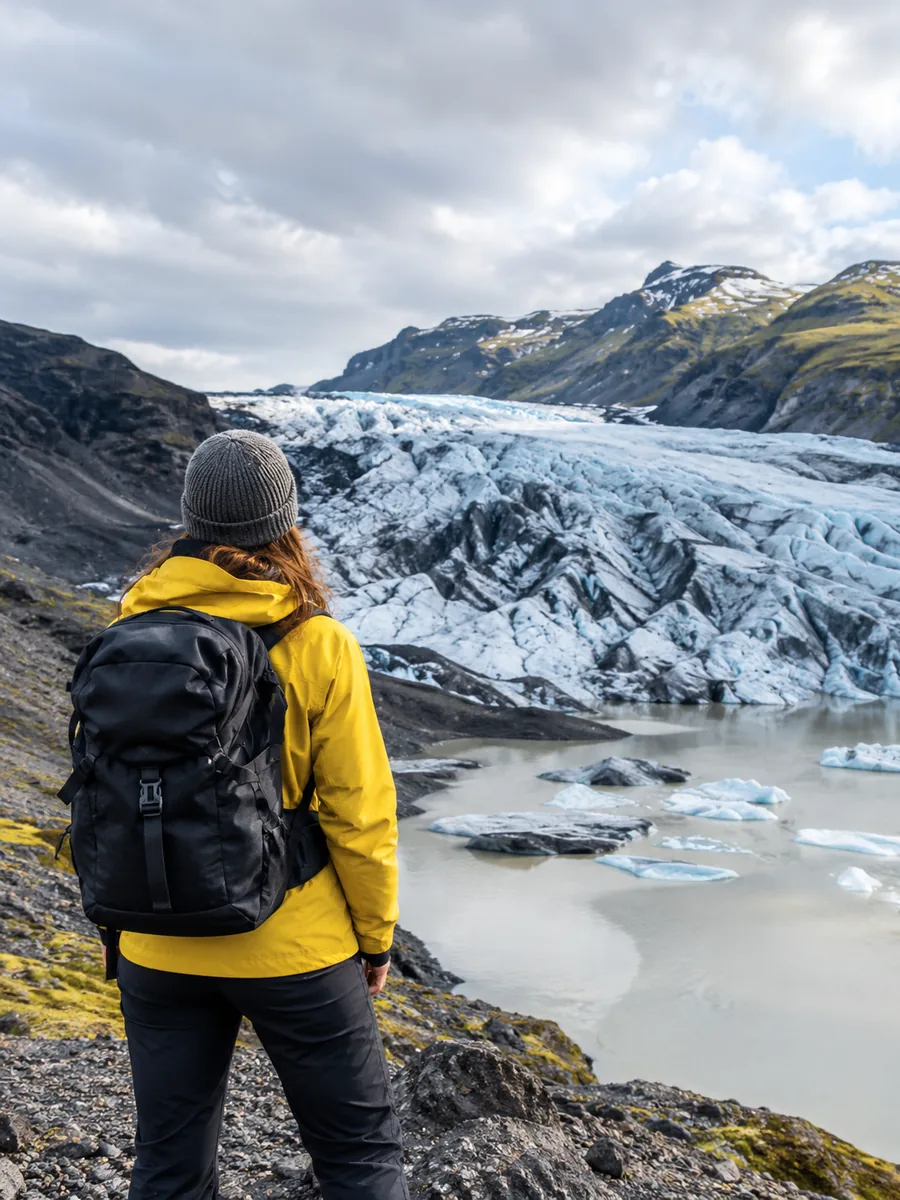
Plan your visit
Plan your visit
Sólheimajökull is easily accessible from the Ring Road. Prepare for varying weather conditions, gravel driving, and specific gear requirements for hiking.
Sólheimajökull Glacier
Sólheimajökulsvegur (Route 221), South Iceland
GPS 63.5328, -19.3697
Open directionsGetting there
Drive yourself or join a South Coast combo tour from Reykjavík.
| How | Time | Cost | Notes |
|---|---|---|---|
| Car: Drive Route 1 (Ring Road) east from Reykjavik for 161 km, then turn left onto Route 221 (Sólheimajökulsvegur) and drive 4 km to the parking lot. | 2.5 hours | 750 ISK parking | The last 4 kilometers is a gravel road but is well-maintained and accessible for 2WD vehicles. |
| Tour: Book a guided day tour or South Coast combo trip departing from Reykjavik. | 10-12 hours | 15,000 - 35,000 ISK | Tours include bus transfer, an expert glacier guide, and all necessary safety equipment. |
| Bus: Take a Strætó public bus to Skógar or Vík, then attempt to hire a local taxi for the final stretch. | 3.5+ hours | null | Highly impractical as local taxis are scarce; renting a car or booking a tour is strongly advised. |
When to go
- J
- F
- M
- A
- M
- J
- J
- A
- S
- O
- N
- D
QuietModerateBusyPeak
Sólheimajökull is accessible year-round. Summer months (June to August) provide milder weather for glacier hiking. Winter months (mid-October to March) are required if you want to explore the natural blue ice caves.
What to bring
Your ticks are saved in this browser only.
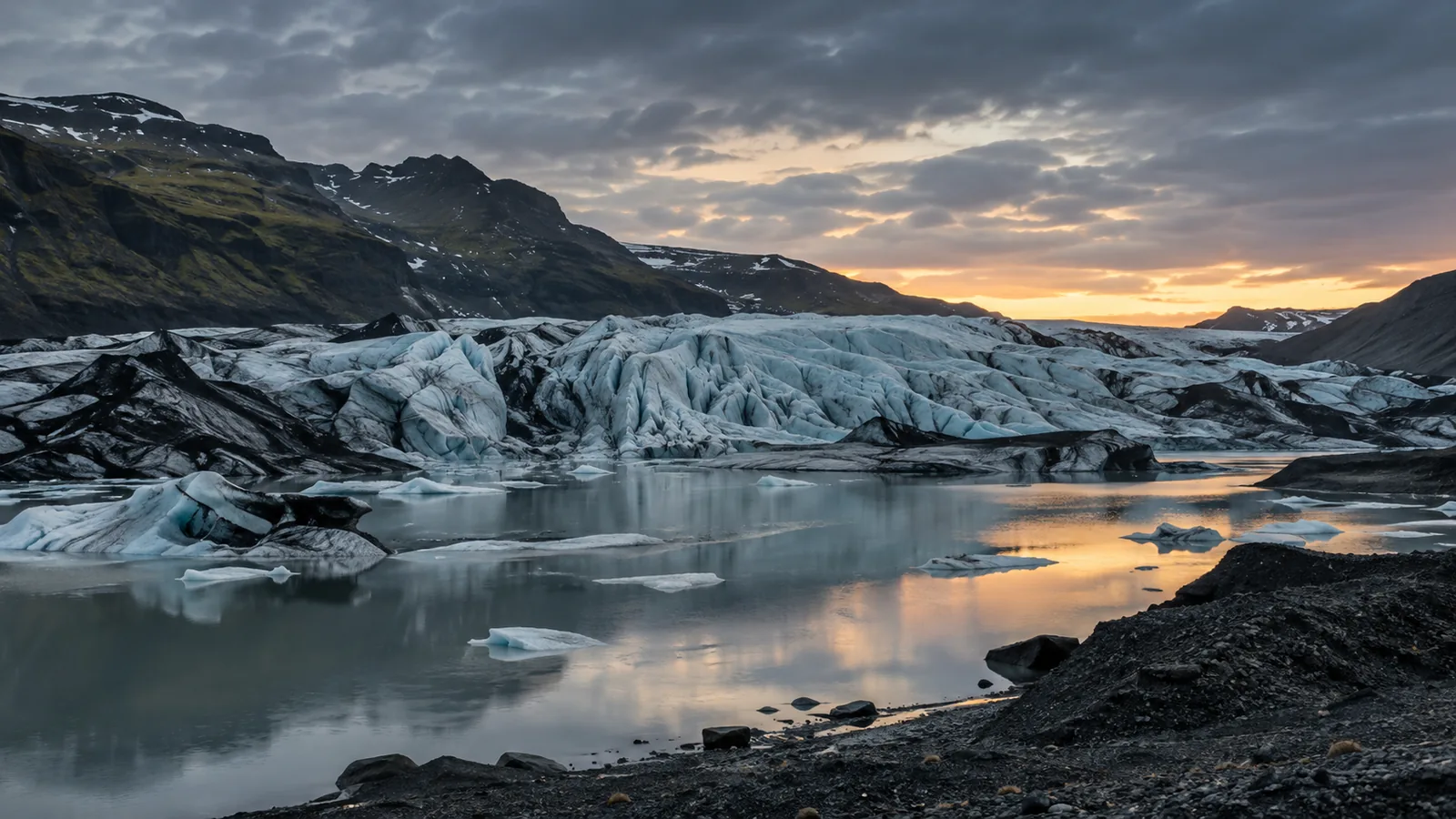
The walk from the parking lot to the lagoon takes about 15 minutes.
The 1.2-kilometer trail is flat and covered in gravel.
How the day runs
Suggested schedules based on your activity level.
A quick visit to see the glacier and lagoon without stepping on the ice.
- Arrive and park
Park at the lot at the end of Route 221 and pay the 750 ISK fee via the Parka app.
- Walk the trail
Take the 1.2-kilometer flat gravel path through the valley.
- Lagoon Viewpoint
Observe the floating icebergs and ash-streaked glacier tongue from the shoreline.
- Return to car
Walk back to the parking lot and use the paid toilets if needed.
A standard half-day itinerary centered around a booked hiking tour.
- Arrive at Base Camp
Arrive 30 minutes before your tour. Park and locate your operator's hut.
- Gear up
Receive your helmet, harness, crampons, and ice axe from the guide.
- Hike to the ice
Walk the 1.2-kilometer trail to the lower ice slopes.
- Safety briefing
Learn how to walk securely in crampons before stepping onto the glacier.
- Explore crevasses
Follow your guide closely through crevasse fields and past deep moulins.
- Return to Base Camp
Return your equipment and warm up before driving to your next stop.
Packing for the glacier
You must wear sturdy, waterproof hiking boots to attach crampons securely. Soft sneakers are not permitted. Dress in warm base layers, ideally merino wool, and strictly avoid cotton. You need a waterproof shell jacket and waterproof hiking pants to block wind and rain.
Bring warm, water-resistant gloves and a thin beanie that fits under a climbing helmet. Sunglasses are essential to prevent snow blindness from the bright ice glare. Keep a small daypack for water and your camera.
Easiest way to do it
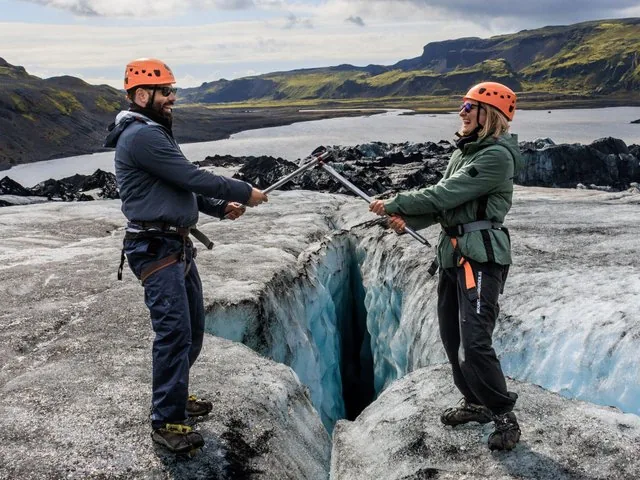
Solheimajokull Glacier Hike Adventure in a Small Group
3 h 30 min 4.9 (904)
- Certified glacier guide
- Coffee and Tea at Basecamp
- Use of glacier equipment - Harness, crampons, ice axe and a helmet
- Use of toilet facility at Basecamp
From$104per person
Cancellation terms differ by platform and listing. Check them before you pay.
Planning questions
How to get to Sólheimajökull from Reykjavik?
Drive Route 1 (Ring Road) east from Reykjavík for 161 km. Then, turn left onto Route 221 (Sólheimajökulsvegur) and drive 4 km on a well-maintained gravel road to the parking lot. The drive takes about 2.5 hours.
How much is parking at Sólheimajökull glacier?
Parking costs 750 ISK per vehicle. You must pay this fee using the Parka app.
What should I wear for a glacier hike in Iceland?
Wear sturdy waterproof hiking boots, waterproof pants, and a waterproof shell jacket. Use warm wool or thermal base layers. Bring gloves, a thin beanie, thick socks, and sunglasses.